
A heavy daily routine, exercises too often abandoned...
In France, more than 3.5 million people live with a chronic respiratory disease. Among them, patients with COPD (chronic obstructive pulmonary disease), cystic fibrosis, severe asthma or followed after pulmonary rehabilitation share the same reality: breathing is a daily battle, and maintaining it requires an exercise discipline that never stops.
In practice, these patients are prescribed 20 to 30 minutes of breathing exercises to do every day, alone, at home: controlled blowing, forced expirations, flow work, diaphragm strengthening. When they leave hospital or a pulmonary rehabilitation programme, they go home with a precise protocol, clear instructions and the promise that, if they stick to it, they will preserve their breathing and their independence.
But the same story repeats itself, study after study: once back home, the exercises are gradually abandoned. And it must be said plainly: the equipment available does not help. To keep up their daily protocol, patients most often end up with a simple glass or bottle of water and a straw to blow into, or at best an incentive spirometer, a small ball or piston device that is useful but purely mechanical, with no interactivity or feedback. Three balls going up, three balls coming down. Twenty minutes. Every day. Alone.
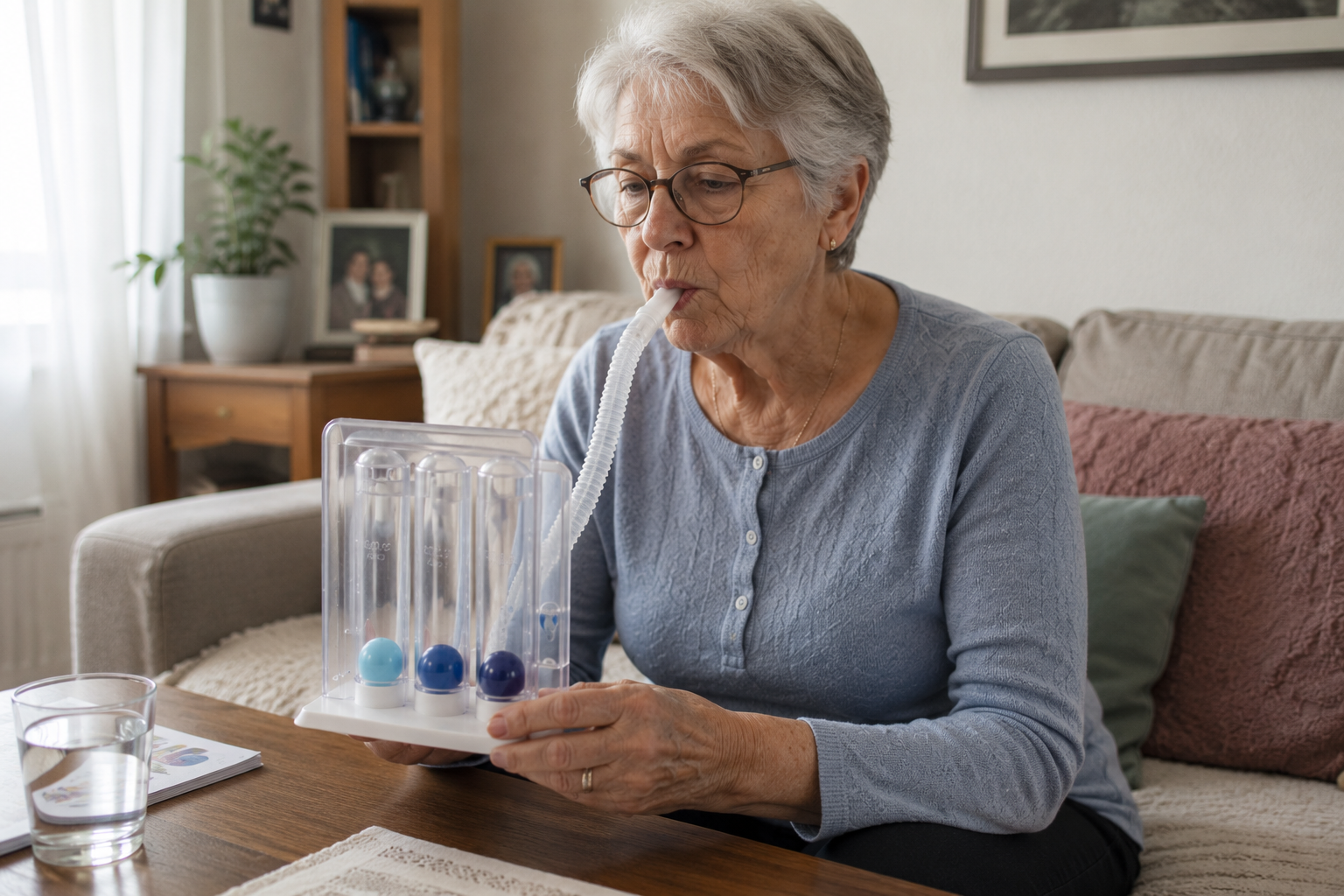
Too repetitive, too tedious, too lonely. With no outside eye, no immediate feedback and no visible sign of progress, motivation crumbles. The benefits hard-won during rehabilitation erode within weeks or months. Re-hospitalisations rise again. The vicious circle closes.
Pulmonologists, respiratory physiotherapists and patients themselves all agree: the problem is not the effectiveness of rehabilitation, it is long-term adherence at home.
LORIO: turning a chore into a game
That is exactly HAPPLYZ Medical's bet with LORIO: what if we made these exercises… fun?
LORIO is a connected medical device made up of a breath controller that patients use at home, paired with software of games dedicated to respiratory rehabilitation. Each exercise becomes a game mechanic: the patient's breath drives the action on screen, complemented by touch controls on the controller to enrich the gaming experience. Each session thus becomes a moment of play rather than a medical chore.
The two key benefits for patients:
A hypothesis we are going to put to the test
The intuition is strong, but it is not enough. At HAPPLYZ Medical, we want to provide clinical evidence that gamification really improves adherence and helps maintain the gains after rehabilitation.
That is the whole purpose of the clinical study we are preparing with COPD patients completing a pulmonary rehabilitation programme, which aims to assess whether LORIO helps maintain the benefits obtained in rehabilitation over time, where adherence to home exercises usually tends to collapse.
If the hypothesis is confirmed, thousands of COPD patients could benefit from rehabilitation that is genuinely continued at home, leading to a better quality of daily life.
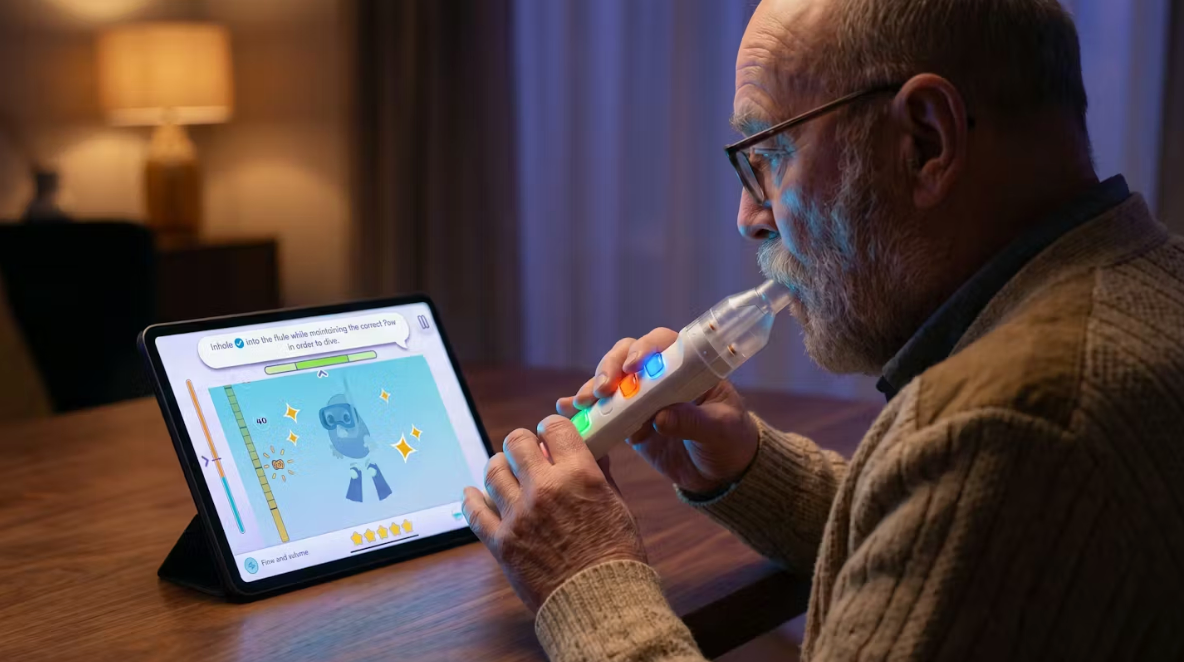
Respiratory rehabilitation should not stop at the door of the centre. With LORIO, we are working to make it continue, at home, while having fun.